10722 Ketchum Valley Dr, Riverview, FL 33579


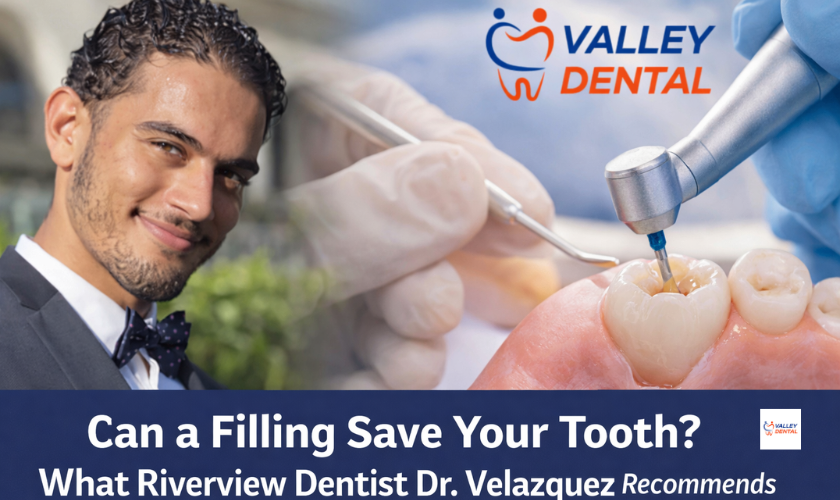
Can a Filling Save Your Tooth? What Riverview Dentist Dr. Velazquez Recommends

Tooth pain or sensitivity can be easy to ignore at first. Maybe it only bothers you when you drink something cold, or you feel a slight ache when chewing. But these small signs can often point to something bigger—like a cavity that may require a dental filling.
One of the most common questions patients ask is: “Can a filling actually save my tooth?” The answer, in many cases, is yes—and acting early can make all the difference.
At Valley Dental Riverview, Dr Velazquez often emphasises that timely treatment with a filling can prevent more serious dental issues down the road. Let’s take a closer look at how fillings work, when they’re needed, and how they help preserve your natural teeth.
What Exactly Is a Dental Filling?
A dental filling is a simple restorative treatment used to repair a tooth that has been damaged by decay. When bacteria create a cavity, they slowly eat away at the enamel and underlying structure of your tooth. A filling restores that damaged area and prevents the decay from spreading further.
Modern fillings are designed to blend naturally with your teeth, especially tooth-coloured (composite) fillings. They not only restore function but also maintain the appearance of your smile.
How a Filling Can Save Your Tooth
The primary goal of a filling is preservation. Instead of removing the tooth or allowing decay to worsen, a filling stops the problem early.
Here’s how it helps:
✔ Stops Decay from Spreading
Once the decayed portion is removed and the filling is placed, the bacteria no longer have a place to grow. This prevents further damage.
✔ Restores Strength and Function
A cavity weakens your tooth structure. A filling reinforces the tooth so you can chew normally again without discomfort.
✔ Prevents More Invasive Treatments
Without treatment, a small cavity can turn into a major issue requiring a root canal or extraction. A filling helps you avoid those more complex procedures.
When Is a Filling Enough?
Not every dental issue requires major treatment. In fact, fillings are most effective when the problem is caught early.
You may only need a filling if:
- The decay is limited to the outer layers of the tooth
- There is no infection in the tooth pulp
- The structure of the tooth is still mostly intact
Dr. Velazquez often recommends regular checkups because they allow problems to be identified before they become severe. Early detection means simpler, more comfortable treatment.
Signs You Might Need a Filling
Many people don’t realize they have a cavity until it starts causing noticeable symptoms. Here are some common signs to watch for:
- Tooth sensitivity to hot or cold
- Pain when biting or chewing
- Visible holes or dark spots on teeth
- Persistent toothache
- Food getting stuck in certain areas
If you’re experiencing any of these, it’s a good idea to have your teeth evaluated. Early treatment is always easier and more effective.
What Happens During the Procedure?
One of the reasons fillings are so common is because the procedure is straightforward and typically comfortable.
Here’s what you can expect:
- The area around the tooth is numbed to ensure comfort
- The dentist removes the decayed portion of the tooth
- The space is cleaned thoroughly
- The filling material is placed and shaped
- The tooth is polished and adjusted for a natural bite
Most appointments are completed in under an hour, and you can return to your normal routine shortly after.
What If You Don’t Get a Filling?
Delaying treatment is one of the biggest risks when it comes to dental health. A small cavity will not heal on its own—it will continue to grow.
If left untreated, you may face:
- Increased pain and sensitivity
- Infection reaching the tooth pulp
- Need for root canal therapy
- Possible tooth loss
What could have been a quick and simple filling can turn into a more complex and costly procedure. That’s why early care is so important.
How Long Do Fillings Last?
Dental fillings are designed to be durable, but their lifespan depends on several factors, including:
- The material used
- Your oral hygiene habits
- Diet and chewing habits
On average, tooth-coloured fillings can last between 5–10 years, while other materials may last longer. Regular dental visits help ensure your fillings remain in good condition.
Maintaining Your Filling and Oral Health
After getting a filling, maintaining good oral hygiene is key to preventing future cavities.
Here are some simple habits to follow:
- Brush twice daily with fluoride toothpaste
- Floss every day
- Limit sugary foods and drinks
- Visit your dentist regularly for checkups
These steps not only protect your fillings but also keep your entire smile healthy.
Why Early Treatment Matters
At Valley Dental Riverview, the focus is always on preserving natural teeth whenever possible. A filling is one of the most effective ways to do that when decay is caught early.
Patients who seek care sooner often experience:
- Less discomfort
- Shorter appointments
- Lower treatment costs
- Better long-term outcomes
If you’re considering dental fillings in Riverview, addressing the issue early can help you avoid more extensive treatments later.
Final Thoughts
A dental filling is more than just a simple procedure—it’s a proactive step toward protecting your oral health. By treating cavities early, you can save your tooth, maintain your smile, and avoid more complex dental issues.
If you’ve been experiencing symptoms or it’s been a while since your last checkup, scheduling a visit can help you stay ahead of potential problems.
FAQs
1. Can a filling completely fix a cavity?
Yes, a filling removes the decayed portion of the tooth and restores its structure, effectively stopping the cavity from progressing.
2. Is getting a filling painful?
No, the procedure is typically comfortable. Local anaesthesia is used to numb the area, so you shouldn’t feel pain during treatment.
3. How do I know if I need a filling or a root canal?
If the decay is minor, a filling is usually enough. If the infection has reached the inner pulp, a root canal may be needed. A dental exam will determine the best option.
4. Can fillings fall out or fail?
Fillings can wear down over time or become loose, especially if exposed to heavy chewing forces. Regular checkups help detect any issues early.
5. How soon can I eat after getting a filling?
You can usually eat shortly after the procedure, but it’s best to wait until the numbness wears off to avoid accidentally biting your cheek or tongue.