10722 Ketchum Valley Dr, Riverview, FL 33579


Clicking or Locking Jaw? When to See a Riverview Dentist

Have you ever noticed a clicking sound when you open your mouth? Or maybe your jaw feels tight, stiff, or even locks when you’re trying to eat or yawn. While these symptoms might seem minor at first, they can often point to a condition known as TMJ disorder.
Many patients ignore these early warning signs, assuming they’ll go away on their own. But in reality, jaw discomfort can worsen over time if left untreated. Understanding what’s happening and when to seek help is the first step toward relief.
At Valley Dental Riverview, patients experiencing jaw pain, clicking, or limited movement are often dealing with issues related to the temporomandibular joint—commonly referred to as the TMJ.
What Is the TMJ and Why Does It Matter?
The temporomandibular joint (TMJ) connects your jawbone to your skull and allows you to speak, chew, and move your mouth comfortably. It works like a sliding hinge, enabling smooth movement in multiple directions.
When this joint becomes irritated or misaligned, it can lead to a variety of uncomfortable symptoms. This condition is known as TMJ disorder (TMD), and it can affect your daily life more than you might expect.
Common Symptoms of TMJ Disorder
TMJ issues don’t always present the same way for everyone. Some people experience mild discomfort, while others deal with more persistent pain.
Here are some common signs to watch for:
- Clicking or popping sounds when opening or closing your mouth
- Jaw locking or difficulty fully opening your mouth
- Pain or tenderness in the jaw area
- Headaches or migraines
- Ear pain or a feeling of fullness in the ears
- Facial soreness or tension
- Difficulty chewing or discomfort while eating
If you’re experiencing one or more of these symptoms regularly, it’s a good idea to have your jaw evaluated.
Why Your Jaw Might Be Clicking or Locking
There are several possible causes behind TMJ-related symptoms. Understanding the root cause can help guide the right treatment.
✔ Teeth Grinding (Bruxism)
Grinding or clenching your teeth—especially at night—puts extra pressure on the jaw joint.
✔ Stress and Muscle Tension
Stress often leads to jaw clenching, which can strain the muscles and joints.
✔ Bite Misalignment
If your teeth don’t align properly, it can create uneven pressure on the TMJ.
✔ Injury or Trauma
An injury to the jaw or face can affect how the joint functions.
✔ Arthritis
Joint inflammation can also impact the TMJ over time.
When Should You See a Dentist?
Not every jaw click requires immediate treatment. However, there are certain signs that indicate it’s time to seek professional care.
You should consider visiting a dentist if:
- The clicking is frequent or getting worse
- Your jaw locks or feels stuck
- You experience ongoing pain or discomfort
- Eating or speaking becomes difficult
- Headaches or ear pain accompany jaw issues
Early evaluation can help prevent the condition from becoming more severe.
How TMJ Issues Are Diagnosed
During your visit, your dentist will perform a thorough evaluation to understand what’s causing your symptoms.
This may include:
- Examining your jaw movement
- Checking for tenderness or swelling
- Evaluating your bite alignment
- Listening for joint sounds
- Reviewing your dental and medical history
In some cases, imaging such as X-rays may be recommended to get a clearer picture of the joint.
Treatment Options for TMJ Relief
The good news is that many TMJ issues can be managed with conservative, non-invasive treatments.
✔ Custom Night Guards
A custom oral appliance can help reduce teeth grinding and relieve pressure on the joint.
✔ Bite Adjustment
Correcting alignment issues can improve how your jaw functions.
✔ Lifestyle Changes
Simple adjustments like avoiding hard foods, reducing stress, and practising relaxation techniques can help.
✔ Physical Therapy
Exercises and stretches may improve jaw mobility and reduce tension.
✔ Medication (if needed)
In some cases, anti-inflammatory medications may be recommended to manage discomfort.
If you’re exploring TMJ treatment in Riverview, the goal is always to relieve pain while preserving natural jaw function through personalised care.
What Happens If You Ignore TMJ Symptoms?
Ignoring TMJ issues can lead to more serious complications over time.
Possible outcomes include:
- Increased pain and discomfort
- Limited jaw movement
- Chronic headaches
- Damage to teeth from grinding
- Worsening joint dysfunction
Addressing symptoms early can help prevent long-term problems and improve your quality of life.
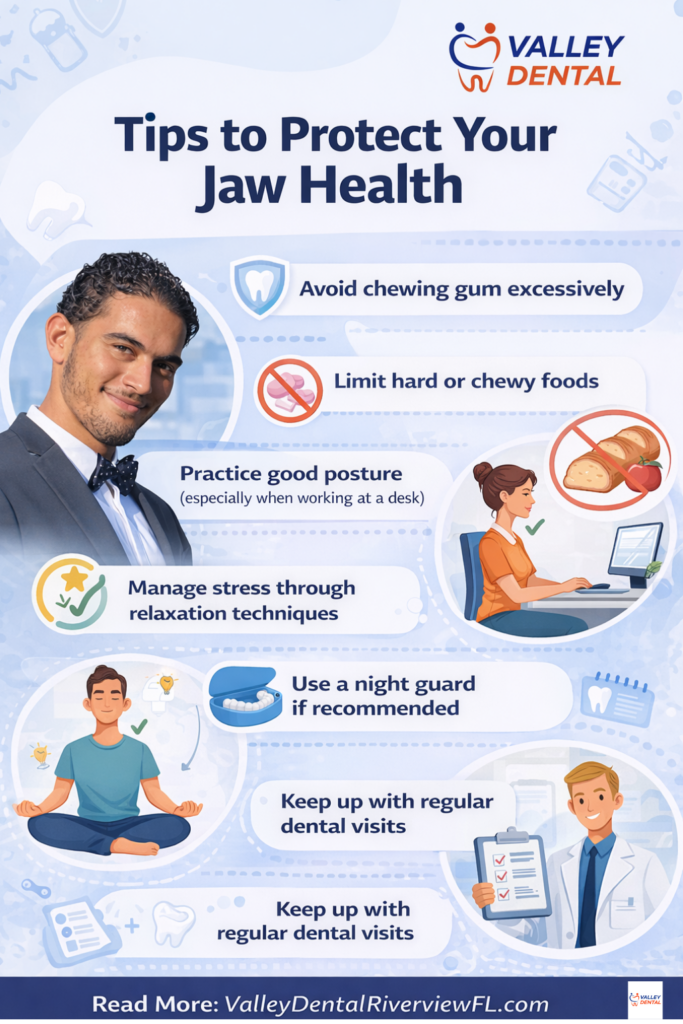
Tips to Protect Your Jaw Health
Taking care of your jaw doesn’t have to be complicated. Here are some simple steps you can follow:
- Avoid chewing gum excessively
- Limit hard or chewy foods
- Practice good posture (especially when working at a desk)
- Manage stress through relaxation techniques
- Use a night guard if recommended
- Keep up with regular dental visits
These habits can go a long way in preventing TMJ-related discomfort.
Final Thoughts
A clicking or locking jaw may seem like a small issue at first, but it’s often your body’s way of signaling that something isn’t quite right. Paying attention to these symptoms and seeking timely care can make a significant difference.
At Valley Dental Riverview, the focus is on helping patients find relief from jaw discomfort while improving long-term oral health. If you’ve been experiencing persistent jaw issues, scheduling an evaluation can help you understand your options and take the next step toward comfort. Visit us before it gets worse!
FAQs
1. Is jaw clicking always a sign of TMJ disorder?
Not always. Occasional clicking without pain may not require treatment, but frequent or painful clicking should be evaluated.
2. Can TMJ issues go away on their own?
Mild cases may improve with rest and lifestyle changes, but persistent symptoms usually need professional care.
3. Is TMJ treatment painful?
Most treatments are non-invasive and focused on relieving discomfort, not causing it.
4. How long does it take to feel relief from TMJ symptoms?
Relief can vary depending on the cause, but many patients notice improvement within a few weeks of starting treatment.
5. Can stress really cause jaw pain?
Yes, stress often leads to clenching or grinding, which can strain the jaw and lead to TMJ symptoms.