10722 Ketchum Valley Dr, Riverview, FL 33579


Swollen Gums or Jaw Pain? When Riverview Patients Should Seek Immediate Care


Discomfort from swollen gums and jaw pain can often be easily dismissed and may be thought of as temporary pain due to chewing, stressed muscles from clenching, and discomfort from dental irritation. However, many people prefer to delay taking any actions and simply wait, expecting that things will normalize and that the discomfort will go away soon enough. Unknowingly, discomfort from swollen gums and pain may be very early warning signs from one’s body, reflecting that something may be going wrong on the inside without the above symptoms being visible.
From the perspective of many Riverview patients, swollen gums or pain in the jaw seems to be associated with different dental conditions. Some may be suffering from infection, gum disease, or even physical damage to the teeth or jaw, and while the pain may be minor at first, it is not likely to do so on its own. Rather, it can always become worse, which often complicates treatment if it is not dealt with early enough.
Recognising when a problem involving the swelling of the gums or jaw ache indicates the need for emergency dentistry services can mean all the difference in the world when it comes to the preservation and protection of not just your oral health, but your general wellness as well. The explanations below show the common causes of these conditions, the symptoms that should under no circumstances be ignored, and when emergency dentistry needs should be sought as the best option for the person in question.
Understanding Swollen Gums and Jaw Pain
Swollen gums and jaw pain may result from a wide range of dental or oral health conditions, some of which could be minor and temporary, while others could be more severe and demand emergency medical attention. The minor conditions may arise as a result of poor oral hygiene practices.
Swelling of the gums is generally due to an inflammation, which might result from the buildup of plaque in the gums, gum disease, hormonal fluctuations, or even a possible infection. In many instances, this inflammation is coupled with symptoms including redness and pain, even while brushing or flossing. When the gums become infected because of the buildup of bacteria under the gum line, this causes discomfort in the patient as the area is difficult to clean.
On the other hand, jaw pain can result from dental issues, which include abscess formation in the tooth, impacted teeth, or malocclusion. It may be associated with temporomandibular joint disorders, teeth grinding, or jaw trauma. It can present itself as a dull ache, sharp discomfort upon chewing, stiffness, or even clicking and popping sounds when opening or closing the mouth.
Swollen gums and pain in the jaw are particularly worrisome, given how often these symptoms overlay. A neglected infection of the gums can spread and affect the surrounding tissues, leading to soreness or swelling of the jaws, and dental abscesses can press upon the jawbone and nerves. If either symptom is persistent, worsens over time, or is accompanied by fever, facial swelling, or an inability to easily open the mouth, it may be indicative of a dental emergency that shouldn’t be ignored.
It also enables early treatment, brings relief from pain, and prevents complications from the problem from becoming serious. Giving these signs close attention is another step towards knowing when emergency dental care is required.
What Causes Swollen Gums?
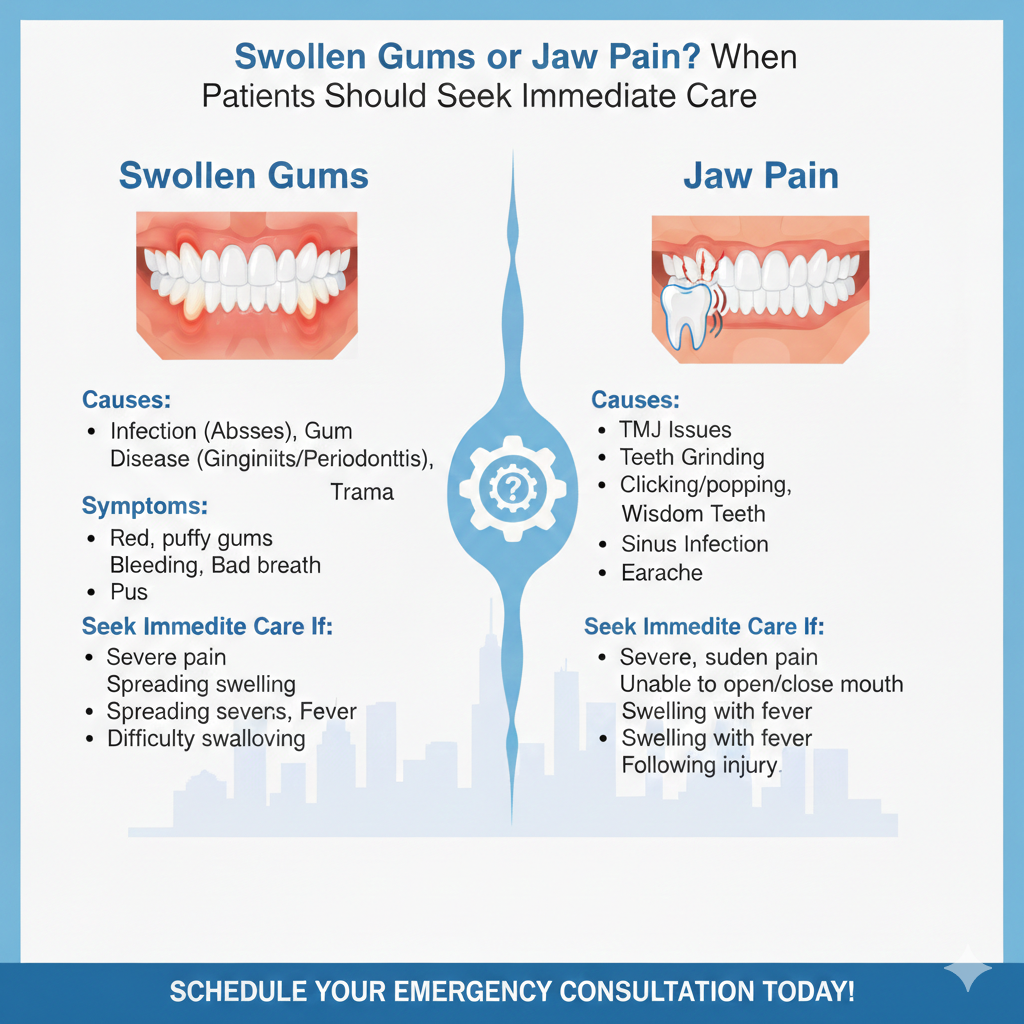
Gum swellings may also result when bacteria irritate the gum. Common causes include:
- Gum disease or gingivitis
- Dental infections or abscesses
- Food debris trapped below the gumline
- Poor oral hygiene habits
- Ill-fitting dental restorations
The swelling may be red, tender, and puffy and may occur as a localised or widespread process throughout the gums.
What Causes Jaw Pain?
Jaw pain may disrupt simple daily activities, such as chewing, speaking, and sometimes sleeping. The causes of jaw pain may include:
- Dental infection spreads into the tissue
- Impacted or Infected Teeth
- Teeth grinding or clenching
- Temporomandibular Joint Disorders
- Trauma or injury to the jaw
If jaw pain develops suddenly or worsens quickly, it must not be ignored.
When Swollen Gums Become a Dental Emergency
Not all gum swelling requires urgent care, but certain symptoms indicate the need for emergency dentistry.
Signs Swollen Gums Need Immediate Attention
Seek immediate care if gum swelling is accompanied by:
- Severe or throbbing pain
- Pus or drainage near the gums
- Fever or general illness
- Rapidly spreading swelling
- Difficulty chewing or swallowing
These signs may indicate an abscess or advanced infection that can spread beyond the mouth if untreated.
Why Waiting Can Be Risky
Dental infections do not stay contained. They can travel to the jawbone, soft tissue, or systemically to the blood itself. As already noted, treatment helps to avoid complications and safeguard overall health.
Jaw Pain That Should Never Be Ignored
Jaw discomfort may start as mild soreness but can progress into a serious concern.
Sudden or Severe Jaw Pain
Severe or intense jaw pain is often associated with infection, inflammation, and structural problems. If the pain becomes worse when the jaw is moved and doesn’t go away when at rest, the pain needs to be checked out.
Jaw Pain With Swelling or Stiffness
When jaw pain is paired with facial swelling, stiffness, or difficulty opening the mouth, it may indicate infection or joint involvement. These cases often require emergency dentistry to prevent further complications.
Common Dental Emergencies Linked to These Symptoms
Swollen gums and jaw pain are often warning signs of underlying dental emergencies.
Dental Abscesses
An abscess is a pocket of infection that forms near the tooth root or gums. It often causes swelling, pain, and pressure. Without prompt treatment, abscesses can lead to severe complications.
Advanced Gum Disease
Untreated gum disease can progress rapidly, leading to gum recession, bone loss, and infection. Swelling and jaw discomfort are common signs of advanced stages.
Impacted or Infected Teeth
Teeth that fail to erupt properly or become infected can cause localized swelling and jaw pain that requires urgent attention.
How Emergency Dentistry Helps Protect Your Health
Seeking emergency dentistry ensures problems are addressed before they escalate.
Rapid Diagnosis and Pain Relief
Emergency dental care focuses on identifying the source of pain quickly and providing relief. Early intervention can significantly reduce discomfort and prevent worsening symptoms.
Preventing Long-Term Damage
Prompt treatment helps preserve natural teeth, protect jawbone health, and reduce the risk of infection spreading beyond the mouth.
Restoring Comfort and Function
Addressing swelling and jaw pain early allows patients to return to normal eating, speaking, and daily activities without ongoing discomfort.
What to Do While Waiting for Emergency Dental Care
If you suspect a dental emergency, taking the right steps can help manage symptoms until you receive care.
Temporary Relief Tips
- Rinse gently with warm salt water
- Apply a cold compress to reduce swelling
- Avoid chewing on the affected side
- Do not apply heat directly to the swelling
These measures provide temporary comfort but do not replace professional treatment.
Conclusion
Symptoms like a swollen gum and pain in the jaw should never be ignored, especially if they get worse or come on suddenly. Knowledge of how and when emergency dentistry can help Riverview residents can go a long way towards preventing complications and ensuring their oral health.
Prompt dental care treats the underlying problem, eases the discomfort, and ensures your general health and well-being. When in doubt, the safe choice is to evaluate and consult a dentist as soon as possible.
Frequently Asked Questions
1. Are swollen gums always a dental emergency?
No, but swelling accompanied by pain, fever, or pus requires immediate dental care.
2. Can jaw pain be related to a tooth infection?
Yes, dental infections often spread to surrounding tissues, causing jaw pain and swelling.
3. How quickly should I seek emergency dentistry for swelling?
If swelling worsens, spreads, or affects chewing or swallowing, seek care immediately.
4. Can gum infections spread to other parts of the body?
Yes, untreated dental infections can spread beyond the mouth and impact overall health.
5. What is the benefit of emergency dentistry for jaw pain?
Emergency dentistry provides rapid diagnosis, pain relief, and treatment to prevent further complications.