10722 Ketchum Valley Dr, Riverview, FL 33579


Cracked Tooth in Riverview? Why Waiting Can Make It Worse


Cracking a tooth usually sneaks up on you. You’re just eating, maybe chatting, and suddenly—ouch—there’s that sharp pain when you bite down. Sometimes it’s from crunching something tough, or maybe you clench your jaw when you’re stressed or grind your teeth in your sleep. Even old fillings can put extra pressure on your teeth and cause cracks. The tricky part? Most folks in Riverview don’t notice anything’s wrong at first. The pain often starts mild, almost easy to brush off.
At first, a cracked tooth might not look like a big deal. Maybe you figure it’ll sort itself out, or it just doesn’t seem worth the hassle of a dental appointment. But waiting it out? That’s when a small issue can blow up into something painful and expensive. Tooth cracks don’t heal on their own. The longer you ignore them, the worse they get. That’s why dentists treat cracked teeth as emergencies—they need quick attention before things spiral. Acting early protects your comfort, your health, and, honestly, your smile.
What is a Cracked Tooth?
A cracked tooth means there’s a break somewhere in the tooth itself. Sometimes it’s just a small line in the enamel, but other times the crack runs deeper, reaching the nerves and blood vessels inside. You might spot some cracks right away, but a lot of them hide below the surface. That’s why you really need a dentist to find the ones you can’t see.
If you suspect a cracked tooth in Riverview, seeking evaluation through emergency dentistry can help determine the extent of the damage and the best course of treatment before the condition worsens.
Types of Tooth Cracks
Not all tooth cracks are the same, and each type requires a different level of care.
Hairline Cracks
These are tiny cracks that affect only the enamel. Hairline cracks are common and often painless, which is why many people ignore them. Over time, however, they can deepen and cause more serious damage that may eventually require emergency dental care.
Fractured Cusps
This occurs when a piece of the chewing surface breaks off, often around an existing filling. While it may not always cause pain, it can weaken the tooth and increase the risk of further cracking.
Cracks Extending Into Dentin or Pulp
When a crack reaches deeper layers of the tooth, sensitivity and pain become more noticeable. These cracks often require emergency dentistry to prevent infection and relieve discomfort.
Split Teeth
If a cracked tooth in Riverview is left untreated for too long, it can eventually split into separate sections. At this stage, saving the tooth becomes more difficult, and treatment becomes more complex.
Vertical Root Fractures
These cracks begin at the root and move upward. They often cause minimal symptoms at first, but infection may develop over time, making emergency treatment necessary.
Because the severity varies, professional evaluation is the only way to determine the right treatment.
Why Cracks Are Easy to Miss
Many people delay care for a cracked tooth in Riverview because symptoms are not always obvious at the beginning. You may experience occasional sensitivity when chewing or brief discomfort with hot or cold foods, but the tooth may look completely normal. Symptoms can come and go, making it easy to dismiss the issue.
Unfortunately, by the time pain becomes consistent, the crack may already be advanced. This is often when patients seek emergency dentistry, even though earlier care could have prevented the situation.
Why Waiting Makes a Cracked Tooth Worse
Ignoring a cracked tooth does not allow it to stabilise or improve. In fact, waiting almost always allows the damage to progress.
Cracks Can Spread Over Time
Your teeth are under constant pressure from chewing, speaking, and clenching. Even normal daily activities place stress on a cracked tooth. Over time, a small fracture can slowly widen and deepen, weakening the tooth structure.
What could have been treated with a simple procedure early on may require urgent emergency dentistry if left untreated.
Increased Risk of Infection
As cracks deepen, bacteria can enter the inner layers of the tooth. Once bacteria reach the pulp, infection can develop. This often leads to increased pain, swelling, and sensitivity.
An infected cracked tooth in Riverview frequently requires emergency care and may involve more extensive treatment and a longer recovery.
Pain Often Appears Late
One of the most concerning aspects of cracked teeth is that severe pain often appears later rather than sooner. Waiting until pain becomes intense can limit treatment options and increase the risk of complications that require immediate attention.
Signs You May Have a Cracked Tooth
Recognising early symptoms can help you seek care before serious damage occurs.
Common Warning Signs
You may have a cracked tooth in Riverview if you notice:
- Sharp pain when biting down or releasing pressure
- Sensitivity to hot, cold, or sweet foods
- Intermittent discomfort with no clear cause
- Swelling or tenderness near the gum line
- Pain when chewing certain foods
Even mild or occasional symptoms should not be ignored, as they may indicate the need for emergency dentistry.
How Early Treatment Protects Your Smile
Prompt care for a cracked tooth in Riverview can make a significant difference in comfort, cost, and outcome.
Preserving the Natural Tooth
Early treatment often allows dentists to stabilize the tooth using conservative options. Preserving your natural tooth helps maintain proper bite alignment, chewing efficiency, and overall oral health.
Preventing Costly Procedures
Treating a cracked tooth early is typically simpler and less expensive. Delaying care often results in the need for emergency dental treatment, additional appointments, and longer recovery times.
Restoring Comfort and Function
Addressing a cracked tooth promptly reduces pain and sensitivity. Early intervention through emergency dentistry allows you to return to normal eating and daily activities without ongoing discomfort.
Treatment Options for a Cracked Tooth
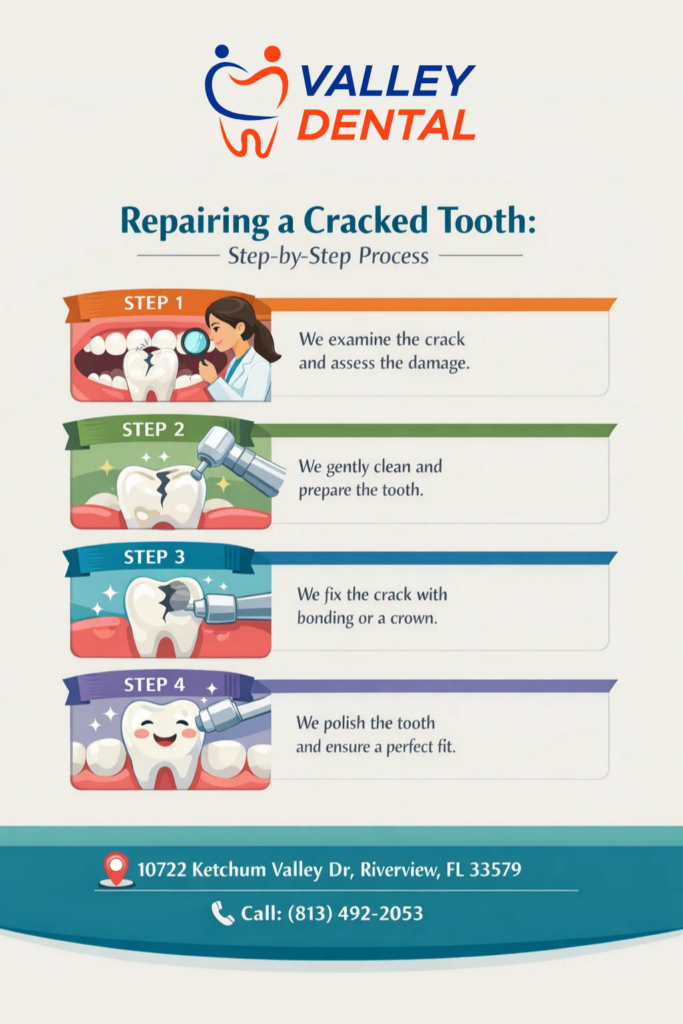
Treatment for a cracked tooth in Riverview depends on the location and severity of the crack.
Minor Cracks and Fractures
Small cracks limited to the enamel may be treated with bonding or protective restorations that reinforce the tooth.
Moderate Cracks
Cracks affecting larger portions of the tooth often require a crown. A crown restores strength and protects the tooth from further damage.
Severe Cracks
If the crack reaches the pulp or root, more extensive care may be needed to address infection and stabilize the tooth. Early detection improves the chances of saving the tooth and avoiding tooth loss.
How to Reduce the Risk of Tooth Cracks
While not all cracks are preventable, certain habits can lower your risk.
Avoid Hard Foods
Chewing ice, hard candies, or popcorn kernels places unnecessary stress on teeth.
Address Teeth Grinding
Grinding or clenching weakens teeth over time. A custom night guard can help protect your smile.
Maintain Regular Dental Visits
Routine dental exams allow early detection of small cracks before they worsen and require emergency treatment.
Conclusion
A cracked tooth may not feel urgent at first, but waiting can allow minor damage to develop into a serious dental problem. Cracks do not heal on their own, and delaying care increases the risk of pain, infection, and tooth loss. The longer the treatment is postponed, the more likely it is that emergency dentistry will be needed.
Seeking early treatment for a cracked tooth in Riverview helps preserve your natural tooth, protect your oral health, and prevent complex procedures in the future. Acting promptly restores comfort and safeguards your smile for years to come. When it comes to cracked teeth, early attention truly makes all the difference.
FAQs
Is a cracked tooth considered a dental emergency?
Yes, a cracked tooth in Riverview is often treated as a dental emergency. Even small cracks can quickly worsen and allow bacteria to enter the tooth, leading to pain or infection. Seeking prompt evaluation through emergency dentistry helps prevent complications and increases the chances of saving the tooth.
Can a cracked tooth heal on its own?
No, a cracked tooth cannot heal on its own. Unlike bones, teeth do not repair fractures naturally. Without treatment, cracks tend to spread deeper over time, making early dental care essential to prevent further damage.
How long can I wait before treating a cracked tooth?
Waiting is not recommended. While symptoms may be mild or intermittent at first, delaying treatment for a cracked tooth in Riverview increases the risk of infection, severe pain, and tooth loss. Early care is usually simpler and more cost-effective than emergency treatment later.
What happens if a cracked tooth becomes infected?
If bacteria reach the inner pulp of a cracked tooth, an infection can develop. This may cause swelling, persistent pain, and sensitivity, often requiring emergency dentistry. Infections can spread if left untreated, making timely care critical for overall oral health.
How can a dentist in Riverview diagnose a cracked tooth?
Diagnosing a cracked tooth often requires a professional dental exam, including X-rays and specialized tools. Many cracks are not visible to the naked eye, so a dentist can accurately assess the severity and recommend the most appropriate treatment before the condition worsens.